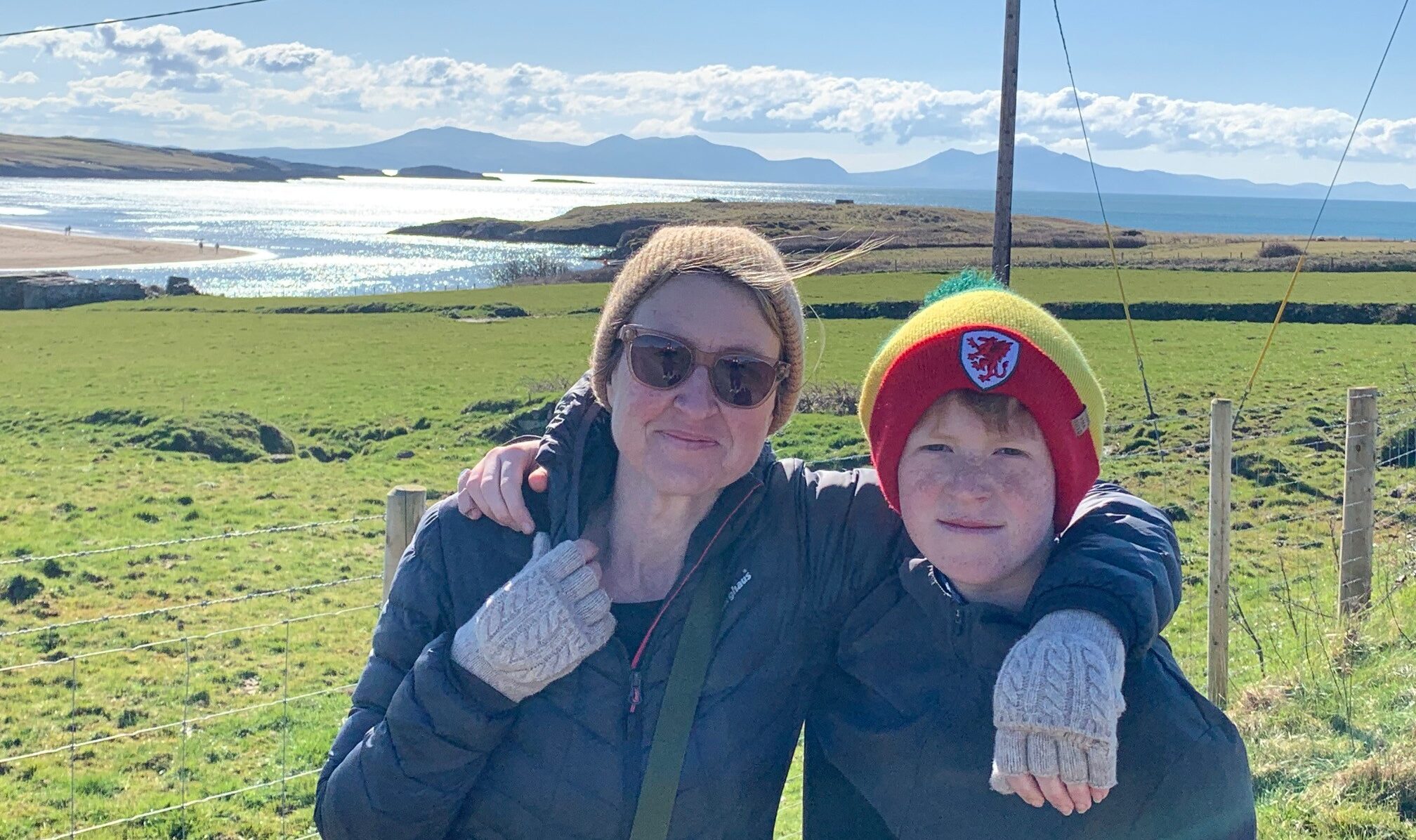
Originally from Staffordshire, Debbie moved to Wales in 1992 to study Sociology and Social Policy. She later completed her Diploma in Social Work (DipSW) and made her home in North Wales.
Now a Supervising Social Worker with Foster Wales Anglesey and a fluent Welsh speaker, Debbie shares her lived experience of how growing up as a child of foster carers shaped her path to a career in social work.
how old were you when your parents started fostering?
I was four years old when the first started fostering, and my brother was two. A child came to stay with us, and I remember being shown a photograph of them beforehand, so it was planned to some extent. The child was two years old when they arrived, and one of my earliest memories is of them returning to their parents’ care.
For me, fostering was very much part of normal life, though it was different from the experience of my brother’s arrival, which involved a build-up through my mum’s pregnancy and getting used to being a big sister.
When fostering began, there was no Form F assessment like there is today – it was simply a case of someone arriving one day and leaving the next. I don’t remember any detailed explanation, just an understanding that she was living with us because her Mam wasn’t very well.
They fostered for 40 years before deciding to slow down by providing respite care and short breaks, eventually retiring from fostering altogether. I know it was a difficult decision for them, as fostering had been such a huge part of their lives. Still, it was an incredible achievement, and I’m very proud of everything they have done.
I spoke with my parents this morning to let them know I’d be sharing my story, and we had a good chat about it all. My dad thinks they cared for at least 100 children over the years.
Some children stayed long term, others for shorter periods, and some only for a night or two in an emergency. They cared for many different children, including large sibling groups of three to five, but what stands out most to me is that each child was unique in their own way.
what was life like for you growing up in a fostering family?
Oh (laughs), there was always drama, but it was also a lot of fun. There was always someone to play with – and someone to argue with – much like any siblings really. We shared so many life experiences together, from going on holidays to going to school. It always felt like a full, busy household.
I recall having twins living with us for about twelve years – just weeks apart in age from the three of us. We shared a bedroom, which wouldn’t happen now, so space was quite limited. Things were very different back then. We lived close together, shared friends, and went to the same school. In many ways, that was positive, but it also brought challenges for all of us – especially when it came to finding our own identities and carving out some time just for ourselves.
For example, we were all on the same netball team at school, and it became a bit of a running joke that we made up almost half the team!
I remember some of their contact visits with family members who lived nearby – those were some of the happiest times for them, getting to see their loved ones. Those family bonds remained strong, and fortunately, one of them was ultimately reunited with a birth parent during their teens.
As a child of foster carers in the 70s and 80s, things often seemed to happen quickly and without much preparation. For example, after living together for twelve years, I went to school one day, came home, and they were gone. Looking back now, as both an adult and a social work professional, I see those experiences very differently than I did at the time.
Looking back, it must have been incredibly hard for the twins. They showed remarkable strength and resilience given the traumatic circumstances they faced. The sense of abandonment and being separated from their other siblings must have been deeply difficult.
Training for foster carers at that time was quite limited. There wasn’t the same level of research, knowledge or understanding available – no trauma-informed practice, little focus on professional learning and development, no support groups for carers, and no dedicated support for the children of foster carers like there is today. Things have truly come a long way.
what about the lasting impact of growing up with foster siblings?
I’ve always known that fostering was something I wanted to be part of – it feels like it’s in my blood somehow, from my early experiences to where I am now, though in a different way.
Growing up with foster siblings has given me a deep understanding of how vital the role of a foster carer can be in transforming the lives of children and young people. It doesn’t mean everything will be “fixed,” but it’s about walking alongside them on that journey and working toward the best possible outcomes.
I’ve been a Supervising Social Worker in Anglesey since 2003, and in many ways, I’ve often played a dual role – especially as a newly qualified social worker when my parents were still fostering. I became skilled at wearing different hats. When Mum called to catch up, I’d quickly reflect: was I being their daughter or ‘Social Worker Debbie’ with a different perspective? Mum is quite direct and would often say, “I don’t want to speak to ‘Social Worker’ Debbie!”
My parents provided a period of stability for the children who stayed with them – whether until they returned home, moved to long-term fostering, or were adopted. Every child was absolutely lovely and took a little piece of me with them when they left, but there were one or two who truly melted my heart and will always hold a special place. Mum remains very close with many of them to this day.
Overall, because of my experiences, I’ve been able to empathise deeply and understand that children can be incredibly resilient even in the face of unbearable trauma. Many go on to lead fulfilling lives, become successful parents themselves, and truly thrive. This lesson has guided me throughout my career in social work, and it’s something I carry with me always.
how did you become a social worker?
While doing some voluntary work with Community Action at university, one of the other volunteers – who had just started her Diploma in Social Work – asked me what I planned to do after completing my degree. She suggested I consider Social Work, given my background and experience volunteering in that area.
That conversation sparked everything.
As part of my application, I received a reference from one of the Social Workers who had worked with our family. I still remember how positive it was about my contribution as part of our fostering family, and that encouragement gave me the confidence to move forward.
As part of the process, I was able to draw on my experience as a child of foster carers – it felt like a natural next step, and I knew I wanted to work in this field.
I was fortunate to take part in a foster care programme in Australia, where I had an incredible experience working alongside the staff and foster families. It was deeply emotional, insightful, and rewarding – an experience that truly sealed my commitment. And here I am, still working in foster care today!
what skills and qualities do you feel a good foster carer needs?
I’d say emotional warmth, empathy, and strong communication skills are essential – and a good sense of humour goes a long way!
Fostering is a role that requires working closely with others, including birth families, local authorities, and various agencies. It’s also important to understand issues around identity, Welsh culture and heritage, or to be open to learning about other cultures. I always encourage foster carers to keep an open mind when it comes to learning opportunities, as this helps develop their skills and knowledge.
And always take the support offered by the fostering team – lean on your Social Worker, Support Worker, other foster carers, and your own support network.
Foster carers need a solid understanding of children’s needs. It’s not always easy, but keeping everything child-centred makes a huge difference.
Ultimately, the rewards of fostering are immense. If you enjoy spending time with children – playing, going out for the day, simply being together – and truly love what you do, then it’s all absolutely worth it.
what advice would you give someone with children who’s thinking of fostering?
Fostering is an incredibly rewarding experience. It means caring for a child who needs a safe, secure base – often during a time of crisis – and offering the nurture, kindness, and support they need to help them reach their full potential. There’s truly nothing like it!
Of course, it comes with its challenges, but there’s also lots of laughter along the way. With the right support, you’ll be making a real difference and improving outcomes for local children.
From both my personal and professional experience, fostering very much becomes a way of life for children of foster carers.
I also saw the impact fostering had on my own children, especially as they got along with the foster children staying with their grandparents. My son loved playing with them, we went on trips together, and they became part of our family – it really is a whole-family endeavour.
Saying goodbye can be hard, so it’s important to have extra awareness and open conversations with your own children in ways they can understand. When foster children move on, be sure to check in with your children and grandchildren to help them feel secure and supported at home.
You’ll make some great connections with other foster carers – there’s a strong community here on the island, with plenty of events and activities. You’re never alone; it’s all about connection.
As foster carers, you’re changing children’s lives, but your own life will change for the better too. I wouldn’t be the person I am today, nor would I be in this role, if it weren’t for fostering.

could you foster with your local authority?
If you live in Anglesey, contact Foster Wales Anglesey and a member of our dedicated team will be in touch for a friendly, no obligation conversation to help you decide if fostering is right for you.
If you live anywhere else in Wales, visit Foster Wales for more information and to find your local authority fostering team.