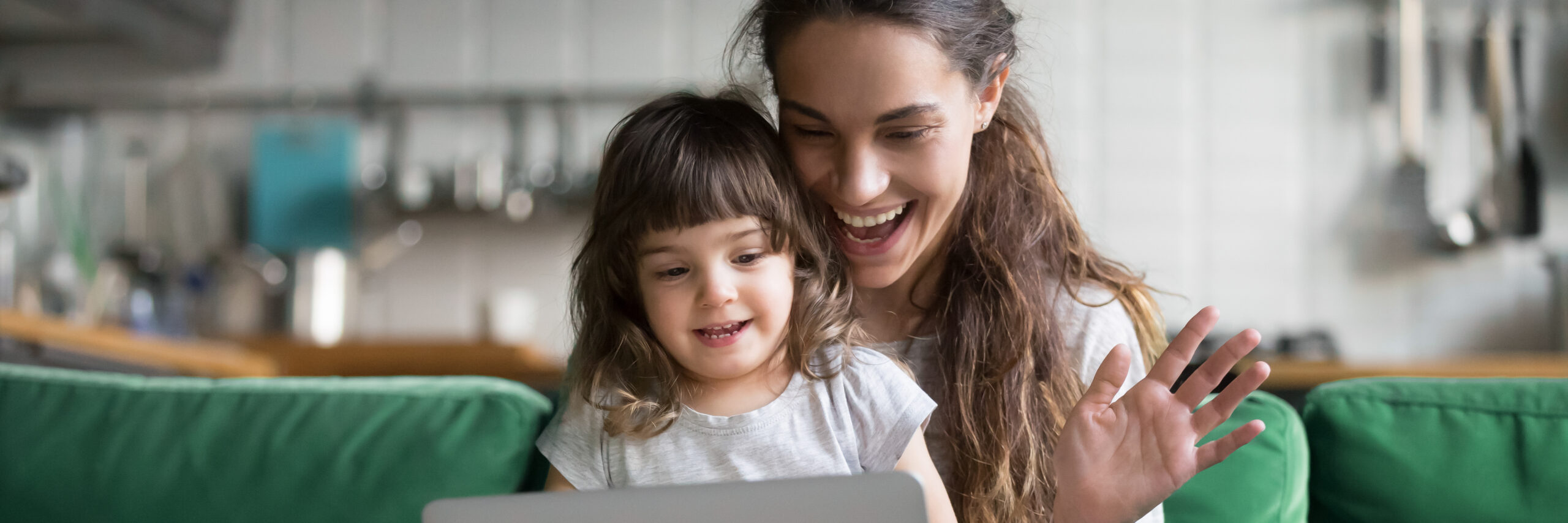
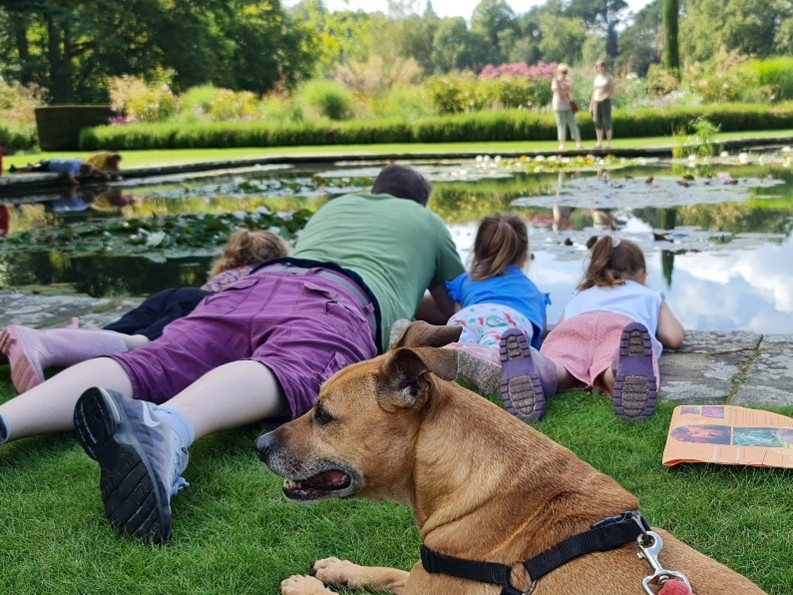
As part of Children of Foster Carers Week (13 – 19 October 2025), Foster Wales Anglesey carers are sharing stories of how their children have helped make those in their care feel happier, more welcome, safer, and more loved.
Some people say the potential impact on their children is one of the barriers to becoming a foster carer, but many children find benefits to being a part of a family who fosters. Seeing life from another’s perspective can be an enriching experience that can help a child learn and develop as an individual. Children also find they can develop their own bonds with children who are fostered in their home.
Kirsty and Matt, share their story of involving their children in the process of fostering with Foster Wales Anglesey.
growing up in a busy fostering household
Kirsty says: “Mum and Dad started fostering in 1995 and so I’ve grown up in a busy household as a child of foster carers myself. We had moved from Birmingham to Anglesey before they started fostering and it was such a different way of life, coming here.
Suddenly we had a bigger home and lots of outdoor space, and when my parents started fostering, our family grew too. There were the usual squabbles – in the playground or at home, arguing over our stuff – but it was part and parcel of family life.
As a child growing up, I was quite oblivious to a lot to do with fostering. We weren’t aware of a difference between my foster siblings and me, it was all quite seamless.
As an adult, I was already part of Mum and Dad’s extended support network, which eventually led to my husband Matt and I becoming registered foster carers ourselves. At first, we were approved as short break or respite carers, to provide support to my parents and the children they cared for. I had an advantage because of my background, and it felt like natural extension of what was already happening.”

always a blended family
“My family has always been blended. Matt became a stepfather to my older son, I have siblings and foster siblings, we’ve a large support network of friends and from church. For me, it’s all just ‘family’ – it’s the people you support, who you rely on and care for – and who care for you.
Since we started fostering in 2014, we’ve welcomed our daughter, and my son, who’s now an adult, has left home. For my daughter, it’s all she’s known from birth, and she talks mostly about the relationships with her foster siblings, even when they’ve moved on. I’ve seen the lasting impact fostering has had in the lovely memories we share.
Over the years our children have helped welcome their foster brothers and sisters, they’ve enjoyed having someone to play with, sharing favourite meals, teaching each other new games and it’s helped the children we care for to see how we do things as a family, like doing homework together, which might be a new experience.”
bonded by connection
“One of the things I’m mindful of is to ensure that every child in our home has one to one time with us both separately. Whether it’s sharing a hot chocolate, playing in the park, painting each other’s nails, or Matt sitting down with them to do some colouring in. It all helps to build connection and reinforce our bonds.
I know that the impact on your child or children can be one of the main concerns for any parent thinking about fostering; we combat this by carving out time to make sure our daughter doesn’t feel like she’s always sharing Mum and Dad, and this is equally true for our foster children, while they are with us, too.
The other thing that’s worked for us has always been communication. No family is the same, they all look different and have different routines, but making sure everyone feels involved and is listened to, it’s essential.
That and an excellent support network!”
about children of foster carers’ week
Children of Foster Carers Week is The Fostering Network’s annual campaign to celebrate the vital contribution the children of foster carers make to foster care.
Each October, fostering services across the UK run events and activities to recognise and reward the children of foster carers for the important role they play in their home, making children in care feel happier, welcome, safer and more loved.